
Reading a listing card before you hand it to anyone
Every card points at one listing, on one Chinese marketplace, run by one seller. Which seller that is decides your return rights, not the card and not the agent.
Type what you are looking for, in English. Results are product cards you can hand to the agent.
Browse
Sixteen starting points. Pick the one you were going to search for anyway, then come back for the part about timing.


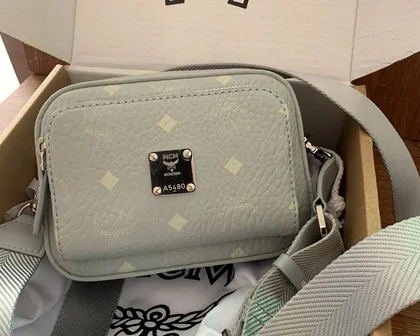


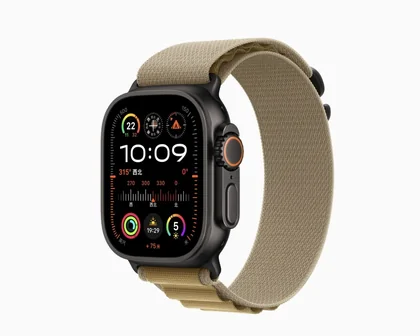

The unit
The card is an address; the product is on the listing
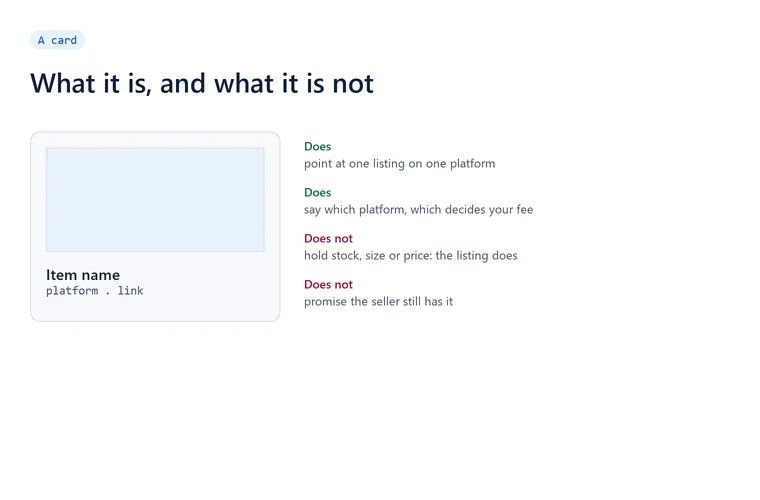
A card carries a picture, a name and an address. That is all of it. Stock, price, size chart and the seller's own policy all live on the listing, and they change there without the card changing here.
Browse by category or search by name; either way you arrive at somebody else's listing, and that is the point at which the rules start applying.
This matters more than it sounds, because of who owns your recourse. The five-day return guarantee is the platform seller's service, not the agent's. The agent's own returns page says it plainly: "We can only return the product for you when the seller agrees". So two cards that look identical can carry completely different rights, and the difference is the seller, which you can only read on the listing.
Read a card as a question, then. It is asking whether this listing still exists, at this variant, from a seller who will take it back. Three answers, and the card knows none of them.
Browse
Six categories where the rule turns on a physical thing
Browsing by category is not only a convenience. For six of them, whether the item can go back at all depends on something you can break in the first ten seconds of opening the parcel.
| Category | What has to still be true |
|---|---|
| New sneakers | Covered while the anti-theft clasp and the anti-damage sticker are uncut and still working |
| Sealed care products | Detergent, sanitary paper, fragrance, hair care, wigs, skin care, body care and essential oils are covered only while the one-time seal is unbroken |
| Sealed cosmetics and perfume | Cosmetics, perfume and beauty tools are covered only while the one-time seal is unbroken |
| Phones, small appliances | Covered while the network access permit is undamaged and there is no water damage |
| SLR or digital camera | Covered while the shutter has been pressed no more than twenty times |
| Large appliance | A TV or air conditioner is covered while it has not been wall-mounted |
The anti-theft clasp on a new pair of trainers is the clearest case. Cut it to try them on and the pair stops being returnable, even inside the window, even unworn. A camera has a counter instead: twenty shutter presses. A television stops being returnable once it goes on a wall.
Nine other categories have no window at all, whatever you do with them. Those are listed on the help page with the wording the agent uses.
Method
Four passes over one card, in this order
The order of these is the point. Three of the four are free to get wrong before you have paid for anything.
Open the listing, not the card
The card's job ends when the listing opens. Read the variant table there: the colour names are the seller's own, and they are what the order form will ask you to repeat.
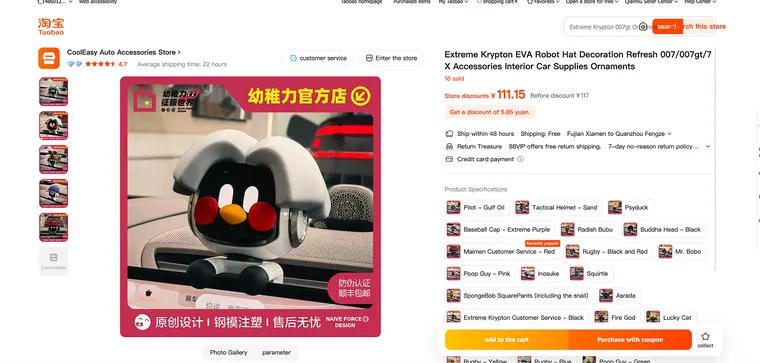
The listing is where stock and variants actually live. Check the seller, not the picture
Pictures are shared between sellers constantly. The thing that is not shared is the shop, its rating and whether it will accept a return. How to read a seller goes through what is worth looking at and what is noise.
Paste the whole address into the agent's own box
The agent buys from a link, so the link has to be the one with the variant already selected. Shortened or app-shared addresses often drop the variant and the order comes back as the default colour.
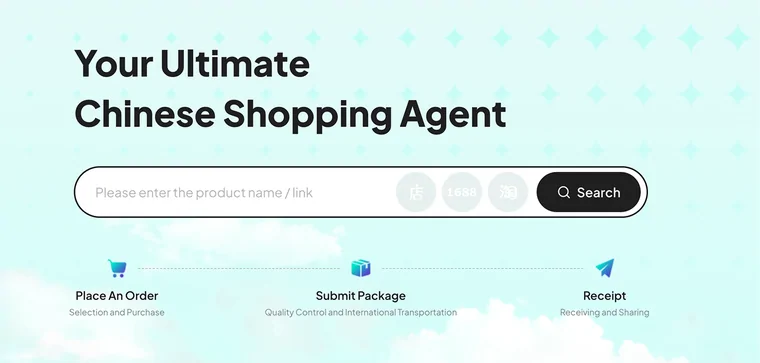
The agent's box takes a pasted listing address. Write the variant down in the message field
The order form has three fields that decide what arrives: Color Classification, Quantity, and Message. The message is the only place a human reads, so anything conditional goes there, in short sentences.
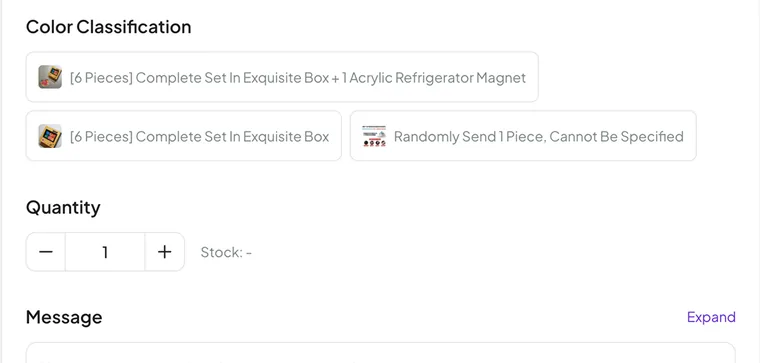
Three fields, and only the last one reaches a human.
Why bother
What an index of listings is actually for
The marketplaces this links into do not have an English search that works. Their search is built for people typing Chinese product nouns, and a translated query returns a different set of results, not a translated set of the same results.
So the value of a kept index is narrow and real: somebody has already found a listing that exists, and recorded which category it sits in. That is it. It does not promise the seller still has stock, it does not promise the price, and it cannot promise a return, because that was never the index's to give.
Treat anything beyond that as a claim to check. A card that promises authenticity, a fixed price or a guaranteed delivery window is describing something the listing has not agreed to.

Judge for yourself
Four things to check on any index, this one included
Judging what makes a useful spreadsheet comes down to four quick checks, and they are the ones that separate a kept index from an abandoned one.
How many links are dead
Open six cards in a category. Listings come down constantly, so a few misses are normal and a page of dead links means nobody has re-read it in months. Nothing on the page tells you which it is, so you have to click.
Whether rules carry a date
A return window written without a date is a claim about an unknown past. The ones here say when they were last read against the source, and the updates log says what was re-read and when.
Whether anyone is named
There should be a person or a company to write to, and the route should not loop back to a contact form that answers nothing. About names who writes this and how to reach them.
How it is paid for
Every index of this kind earns from referrals or from the agent directly. A site that does not say so is not more independent; it is less forthcoming. This one earns a commission on accounts opened through its links.




Questions
Asked before the first order
Does a card mean the item is in stock?
No. The card records that the listing existed when it was added. Stock lives on the listing and the seller can end it at any time, which is why a dead card is the normal failure and not a sign of anything worse.
Can the agent get me a return on anything I buy?
Only where the platform seller offers the guarantee, agrees to the specific return, and the item is still in a sellable state, and only within the window. All four have to hold. One parcel covers the window, which is the one that runs out while you are not looking.
Is the Chinese seven-day no-reason return available?
No, and the agent says why: those measures cover online commodity sellers, and an entrusted purchasing service is not one. The guarantee described on these pages is a different thing with a shorter clock and more exclusions.
Why not just search the marketplace myself?
You can, and for a known brand it often works. The index earns its keep on the categories where you do not know the Chinese noun to type, which is most of them.